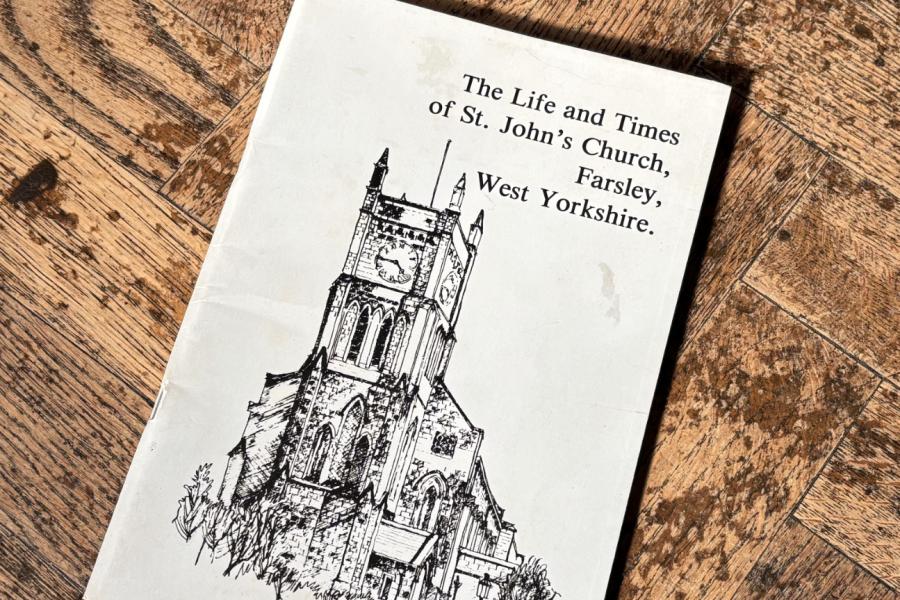
THIS CHURCH OF
ST. JOHN THE EVANGELIST
WAS BUILT BY SUBSCRIPTIONS
AIDED BY GRANTS FROM THE CHURCH BUILDING SOCIETIES
AMOUNTING IN THE WHOLE TO £1,892.19s.10d.
Obtained through the exertions of
the Reverend SAMUEL REDHEAD, Vicar of Calverley
by whom the Foundation Stone was laid
on the 8th July 1842
The Church was consecrated by
CHARLES THOMAS, LORD BISHOP OF RIPON
27th October 1843
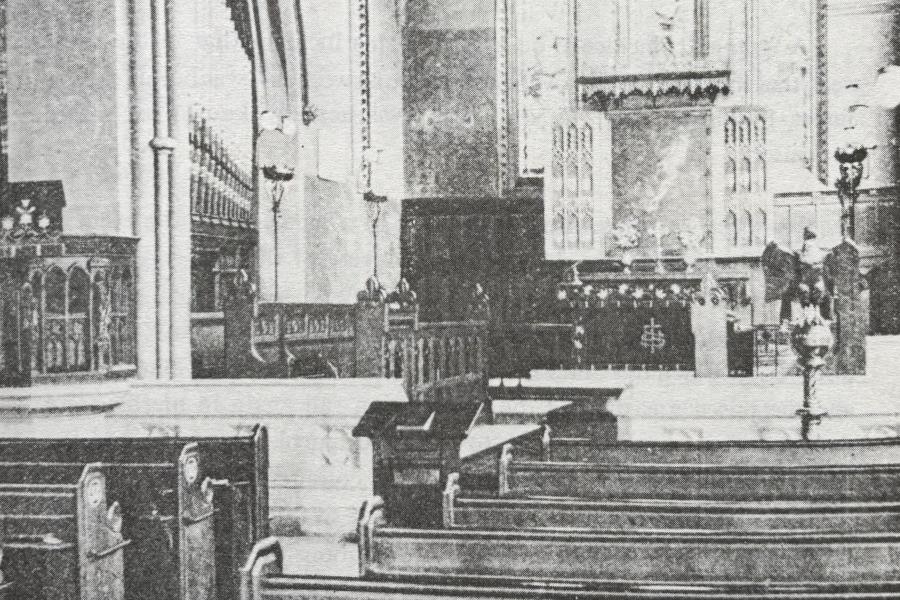
These details can be found on tablet on the North side of the chancel but the "exertions" of Samuel Redhead are to be found in the building of St. Johns. He was a very hard-working dedicated man of whom it was said :-
"We prayed for silver, but God has given us gold".
A settled ministry had been needed for many years in Farsley and great difficulty was encountered when the fund raising was launched but Rev. Redhead persevered with his efforts.
Some years later at the Diocesan Society in 1848, the Bishop of Ripon during his speech had the following to say regarding the church and the "Farsley Folk" at the time :-
"I can point to one place where the blessing of a church and resident pastor was so little appreciated that no more than £16 could be raised towards its erection in a district swarming with a manufacturing population and the clergy were ill-treated when they proceeded to lay the first stone of the building. The work, however, was persevered in, the Church consecrated, a diligent minister appointed......"
Perhaps the Bishop was not fully aware of how poor the villagers were or perhaps he thought the "better-off" should have provided - we shall never know!
The Bishop did continue and in a way praised the parishioners by making the point that "when a parsonage was needed these self-same people raised £200 towards the building" in 1848. No doubt the presence of their own church and Vicar, encouraged them in times of need.
Returning to the fund raising for the Church, Rev. Redhead somehow interested Her Majesty the Queen Dowager - Adelaide (Queen to William IV) to make a donation. This was then followed by eminent people such as Earl Fitzwilliam, Earl of Burlington, Lord Morpeth, Bishop of Ripon and others which included Rev. Redhead and members of his family (a full list is found at the back). The whole sum was augmented by grants from the Ripon Diocesan Church Building Society, from the Incorporated Society for the Building and Enlarging of Churches and from the Ecclesiastical Commissioners.
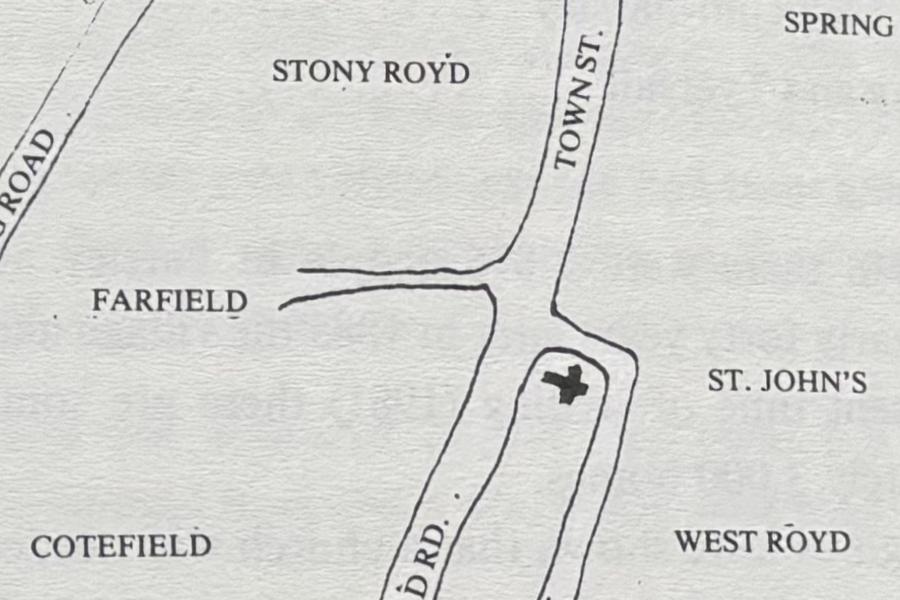
We must not forget that the site, situated at the "South part of the Township of Farsley" was given by Thomas Thornhill of Fixby Hall, the Lord of the Manor of Calverley. The site was sufficient to provide for the erection of the Church but also to provide for a necessary burial ground and a vicarage. Thomas Thornhill also contributed by donating 100 guineas towards the fund.
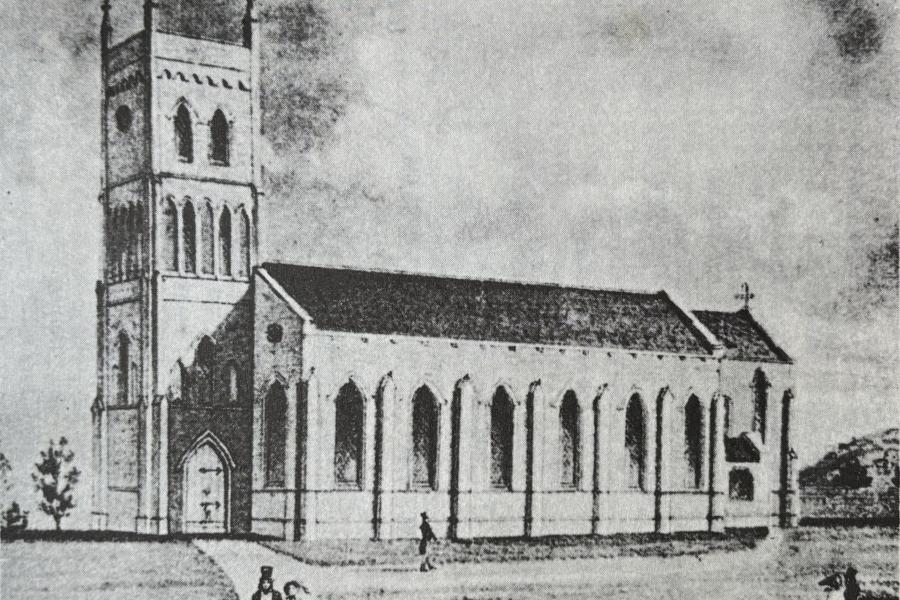
It has been said - "It is remarkable that so neat a religious edifice should be erected for so small a sum". The design of the church is credited to William Wallen, F.S.A., architect of Huddersfield who actually gave his services free. Drawings, specifications and estimates were submitted towards the end of 1841. The architect refused his fee and the following was written into the estimate - "The architect's services given gratuitously in consideration for the extreme poverty of the hamlet".
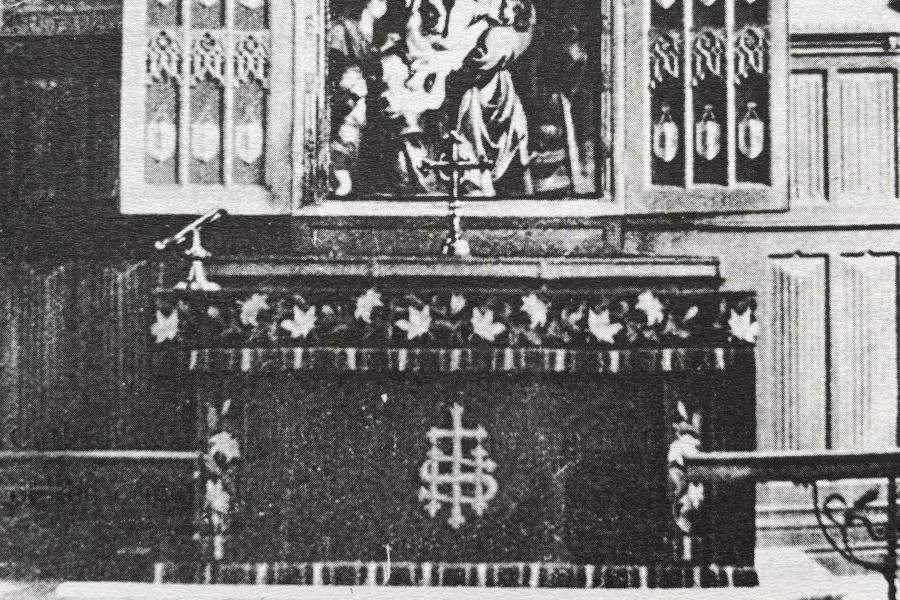
Estimates totalled almost £1,256 but the total cost as shown on the tablet in the Chancel was nearly £1,893, the difference was towards the church furnishings.
Tenders were received at the Thornhill Arms in Calverley and included the following which were accepted -
Mason & Slater - £696. 17s. 6d.
Carp. Joiner & Ironmonger - £390. 10s 7d.
Plasterer - £64. 40s. 6d.
Painter - £49. 17s. 8d
Smith - £7. 8s. 8d.
Building began in early 1842 with the foundation stone being laid on Friday 8th July. Reuben Gaunt records in his diary that "Rev. Samuel Redhead laid the first stone in the presence of some 2,000 spectators and during the proceedings – the rain fell in torrents".
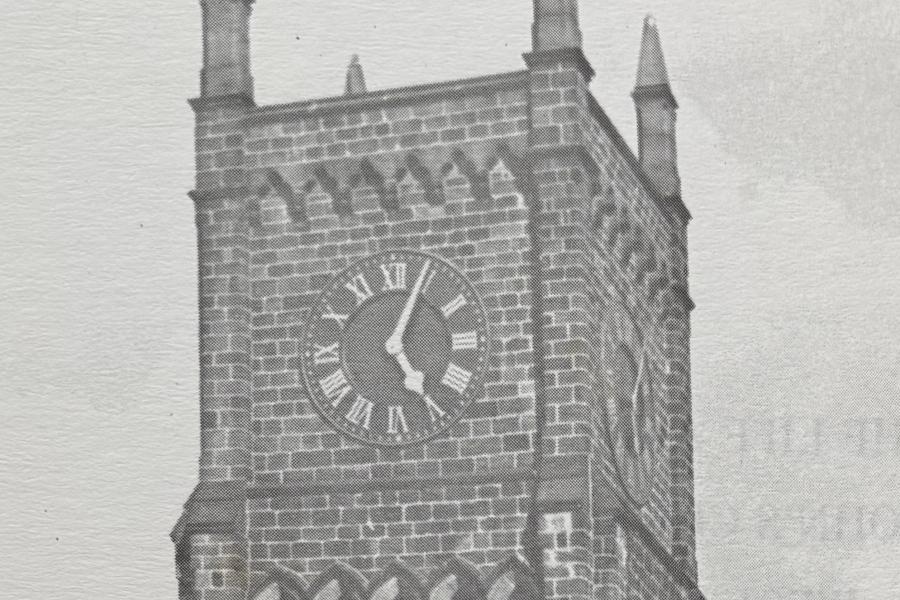
The foundation stone was uncovered in 1895, when due to subsidence of the tower over the years, the tower had to be demolished and then rebuilt. The stone has the following inscription.
THIS FIRST STONE OF THE CHURCH OF ST. JOHN THE EVANGELIST FARSLEY IN THE PARISH OF CALVERLEY BUILT BY SUBSCRIPTION WAS LAID BY THE REV. S. REDHEAD VICAR OF CALVERLEY JULY 8th 1842 BEING THE SIXTH YEAR OF THE REIGN OF HER MAJESTY QUEEN VICTORIA.
THOMAS THORNHILL ESQ. DONOR OF THE SITE
WILLIAM WALLEN F.S.A. ARCHITECT
CHRISTOPHER GREAVES CHEETHAM
WILLIAM WADE
CHURCH WARDENS
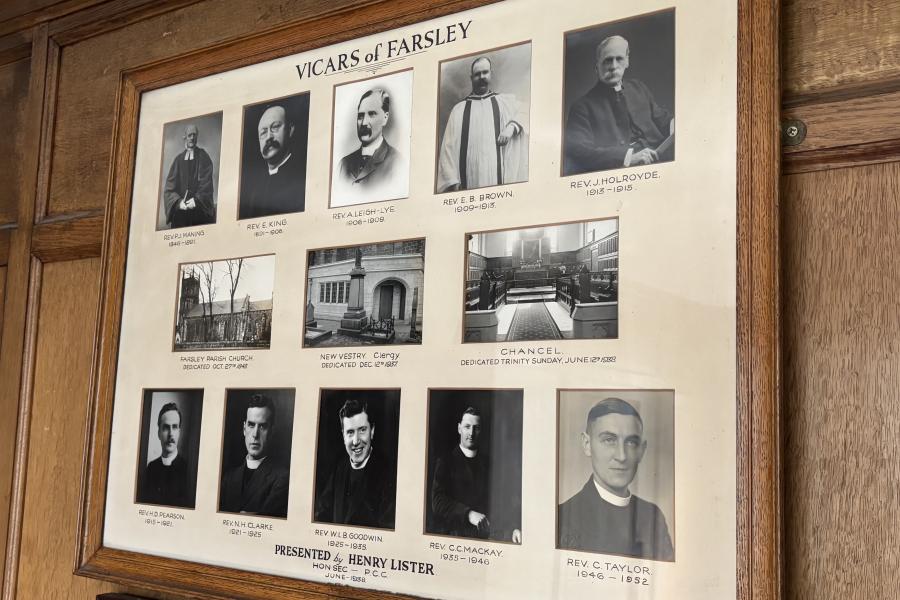
The building took over a year to complete being consecrated on October 27th 1843. By an act of Parliament, Farsley was constituted as an independent new parish and the church a Parish church. The first vicar to be inducted was the Rev. Irwin Lloyd M.A. There is a mural tablet to his memory (situated on the South wall of the Chancel) and reads "In memory of the Rev. Irwin Lloyd, M.A. The first incumbent of this Church and afterwards of Southgate, Middlesex who died April 6th 1858. Aged 42 years." He was vicar for three years until 1846.
On Friday, October 27th 1843 the church was consecrated at a special service by the Right Rev. the Lord Bishop of Ripon, Charles Thomas Longley. The tablet in the Chancel records the event as shown earlier. As a matter of interest Bishop Longley was the first Bishop of Ripon and afterwards Archbishop of Canterbury.
The Church of St. John the Evangelist was now ready to serve its congregation in what was "a very populous district". It is reputed that at one time the area of Farsley, Calverley, Pudsey, Greengates and Idle had a population that exceeded that of Bradford. These areas made up the ancient parish of Calverley.
Sunday, 29th October 1843 saw the church opened for the first regular services with Rev. Redhead preaching in the morning and Archdeacon Musgrave in the afternoon. Reuben Gaunt records that "In the afternoon great alarm was caused by the breaking of a wooden flange on one of the pillars of the gallery. Many people rushed out of the church and several articles were lost, but nobody materially injured". The gallery was designed to hold two hundred people. Whilst mention of the gallery is made it may be interesting to note that the front of the gallery was padded indicating that children were in the habit of kicking it. In fact in 1892 it became necessary to close the gallery at evensong due "in consequence of the persistent irreverence of young boys".